

Researching My First Golf Simulator | Home Simulator Build
Late last fall, I started spending a lot of time researching golf simulators.
The original goal was still the same:
Break 80.
Living in a townhome, I don’t really have space to chip balls in the yard or work on my swing consistently at home. The idea of having a simulator available during the winter started sounding less like a luxury and more like a useful training tool.
My father-in-law Mark and I started talking about potentially building one between our two houses.
That conversation quickly turned into months of research.
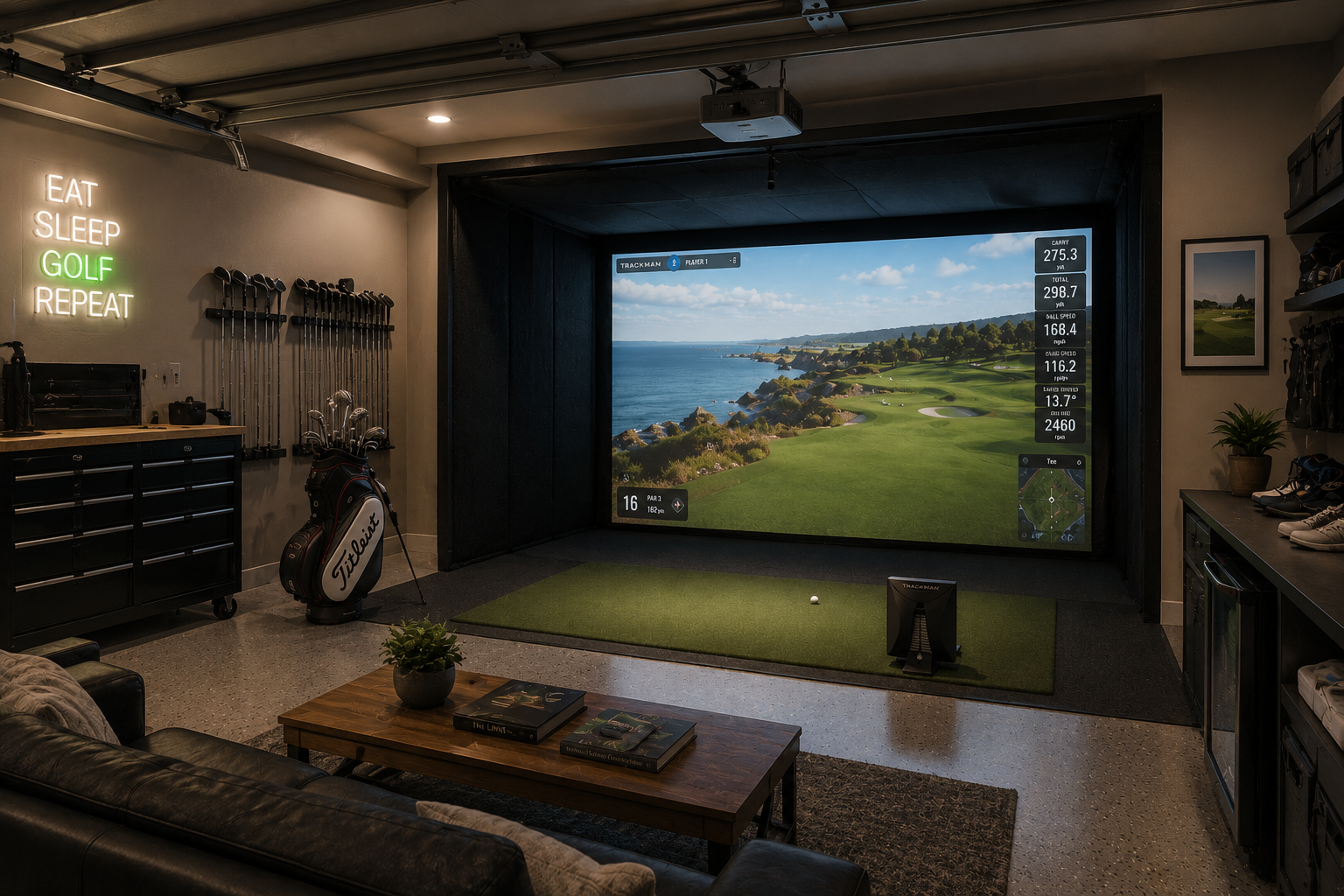
Daydreaming
One thing I didn’t realize at first was just how many simulator options exist.
You can go extremely simple with just a hitting mat, net, and launch monitor. Or you can go fully immersive with massive impact screens, overhead projectors, custom rooms, gaming PCs, premium software, and thousands upon thousands of dollars invested into the setup.
And naturally, the deeper you dive, the faster the price climbs.
After hours of reading forums, watching YouTube videos, and scrolling simulator setups online, we eventually realized it helped to simplify things and focus on what actually mattered to us.
At the core, we wanted something immersive, something fun, and a space we’d genuinely enjoy spending time in together. That simple goal quickly turned into a long list of decisions and considerations.
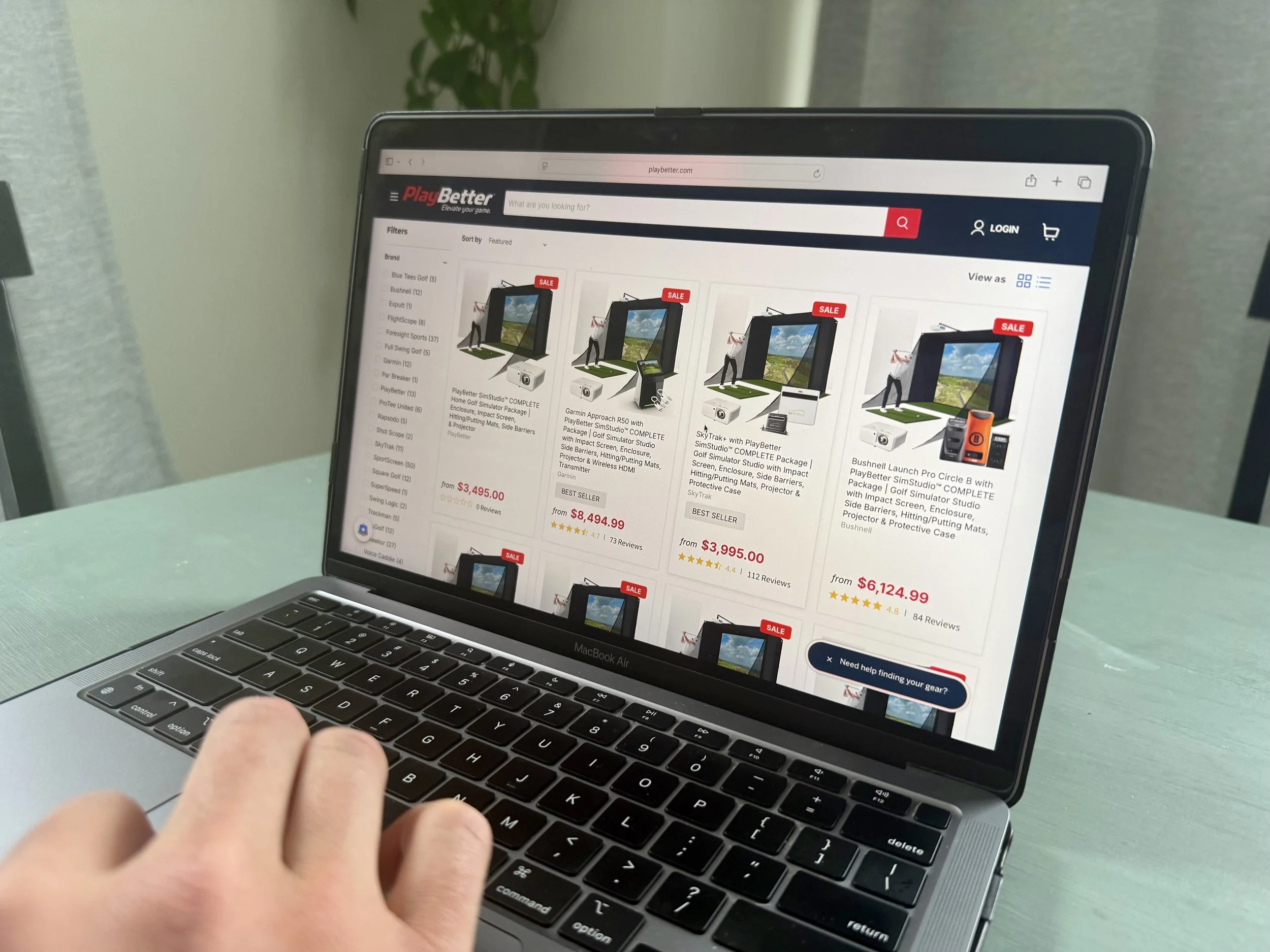
Somewhere Between Research and Obsession
Before long, we found ourselves thinking about room size, ceiling height, screen size, projectors, software, computer requirements, and of course… budget.
At first, bigger always seemed better.
If companies offered 12-foot setups, why not go as large as possible?
The problem is that once you start diving into the details, the entire process becomes overwhelming pretty quickly.
There are endless combinations, upgrades, and price points once you start diving into the simulator world. You can either purchase prebuilt packages from companies like SkyTrak and PlayBetter, or hand-pick every individual component and build the setup exactly how you want it. The problem is that the deeper we got into the research, the harder it became to actually pull the trigger. Buyers remorse somehow started before we had even purchased anything.
On top of that, we still didn’t fully know where the simulator would actually go.
Every room we considered between our houses came with its own tradeoffs — lower ceilings, tighter swing space, noise concerns, or sacrificing usable living space. Once you realize you’re dedicating a major area of your home to a simulator, it quickly becomes a much bigger decision than simply buying golf equipment.
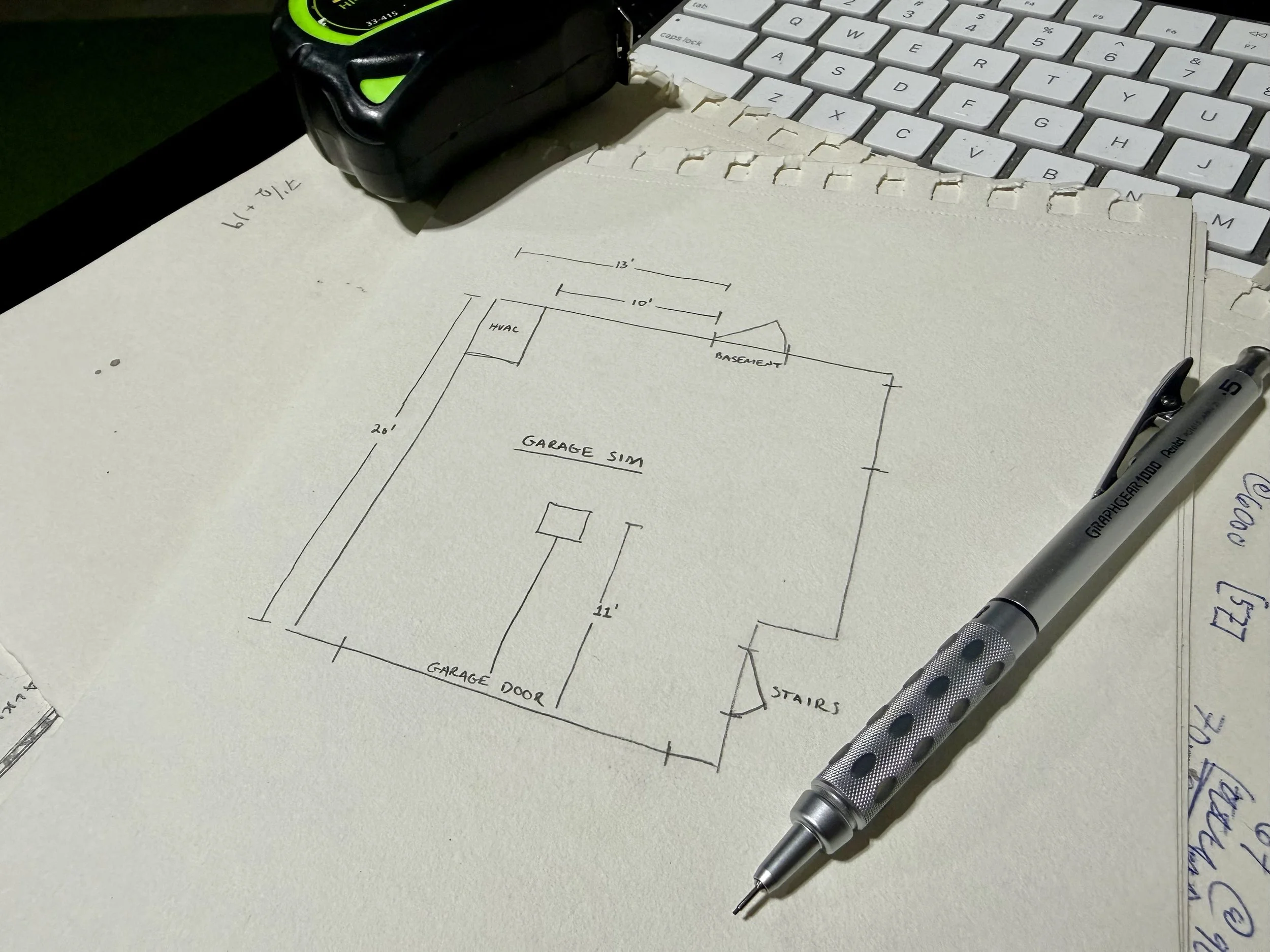
Trying to Make Sense of the Numbers
Eventually, I turned to Facebook Marketplace.
The problem was:
good setups disappeared almost instantly.
If something decent popped up, it usually already had pending offers by the time you messaged the seller.
Still, all the research helped because we finally had a pretty good ballpark idea of what we wanted and what type of setup made the most sense for us.
After roughly four months of checking Marketplace constantly — probably more often than I should admit — I finally found a setup a couple hours away. And honestly, the timing could not have worked out better.
The seller was active military and had recently received orders to relocate. He had purchased the simulator only a short time earlier and needed it gone quickly before moving.
The setup was lightly used, nearly half the price of buying new, and almost exactly what we had been hoping to find.
At that point, it felt too good to pass up.
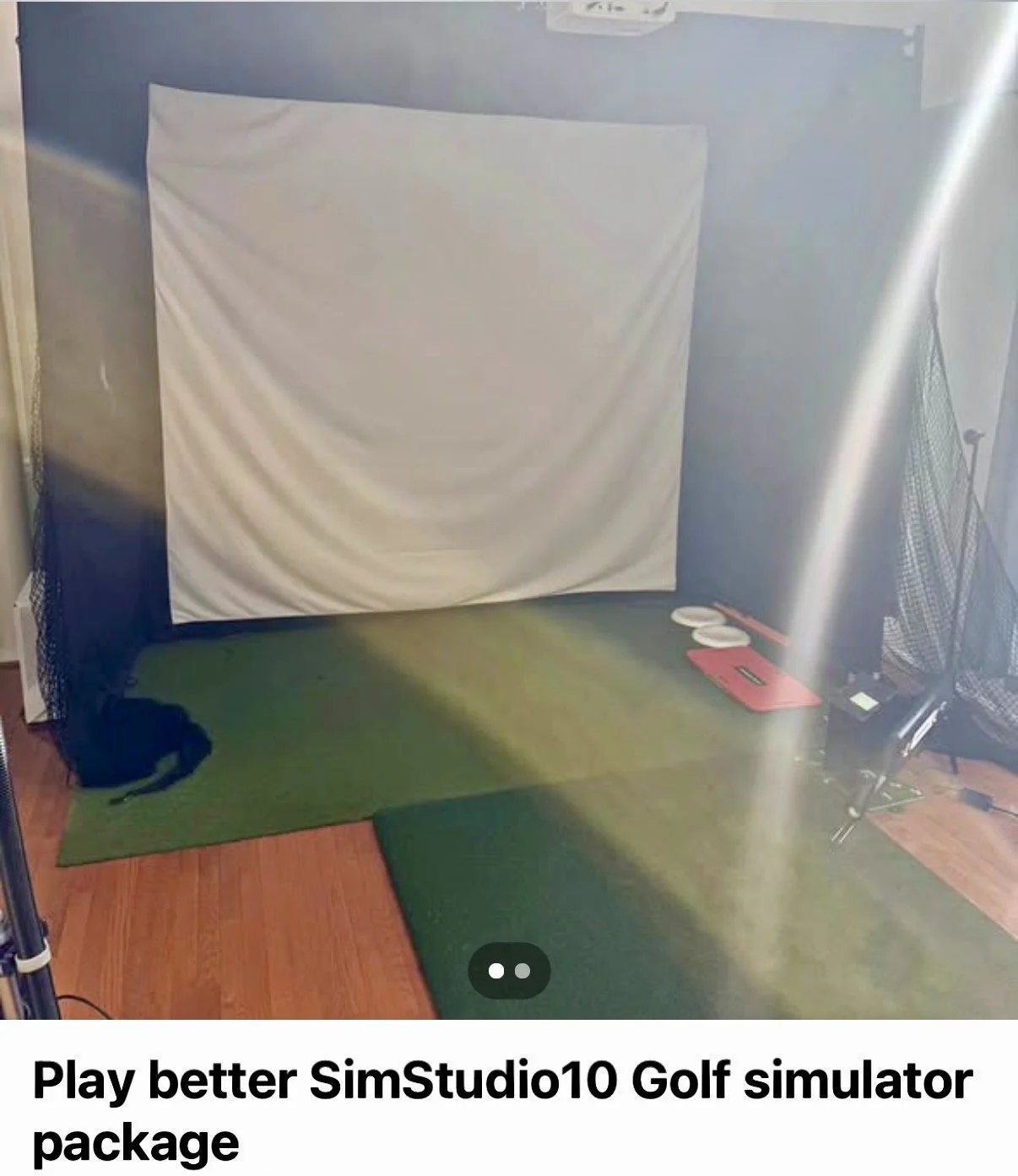
The Marketplace Find
The following Saturday, my friend Nick and I hit the road early to pick it up while the opportunity was still there.
And just like that, we officially had our first golf simulator!
After months of research and waiting for the right opportunity, we finally had a simulator sitting in the garage waiting to be assembled.
